

In the world of biohacking and elite performance, 2026 is the year of Molecular Hydrogen. Enter the Savage Hydrogen Pro—the dual-chamber powerhouse setting the new gold standard in the USA.
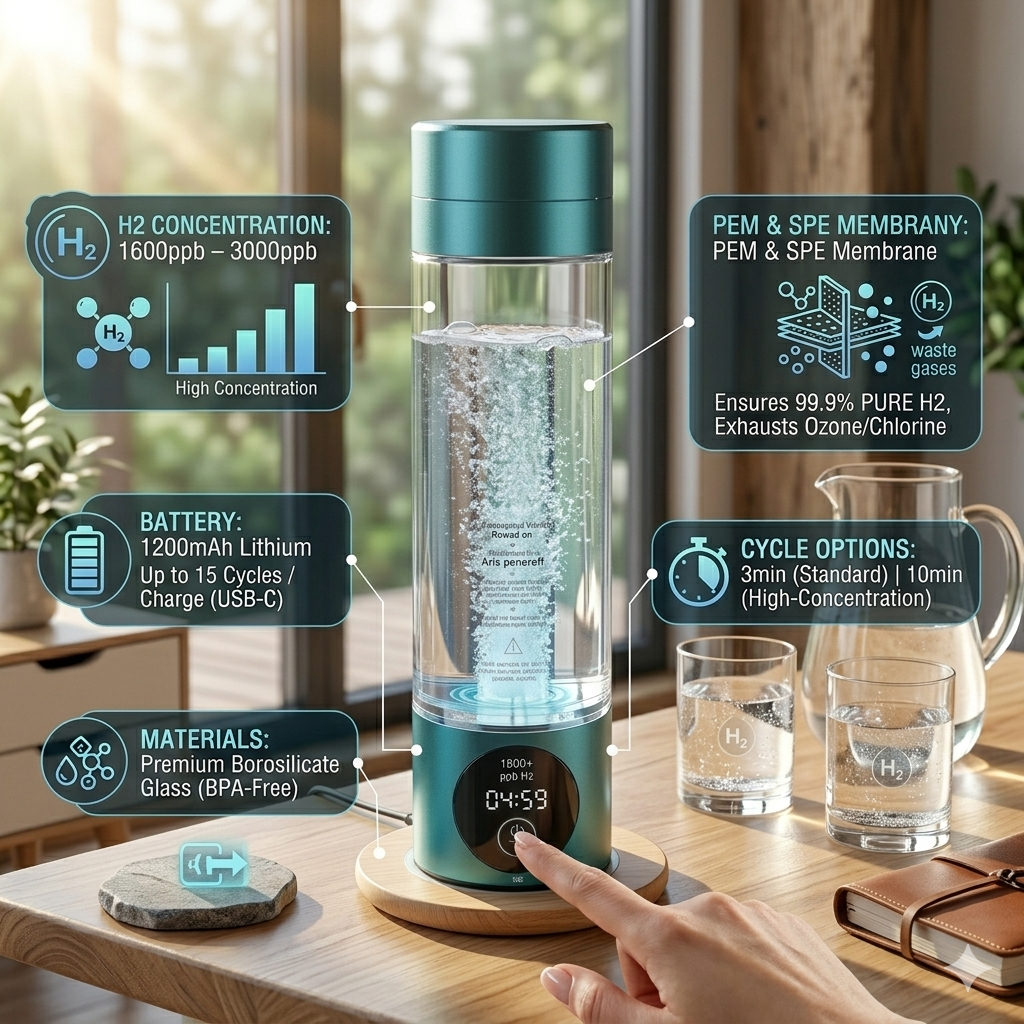
As the market becomes flooded with cheap imitations, a critical question arises: Is your water bottle actually delivering therapeutic results, or just expensive bubbles?
Most hydrogen bottles offer between 800 and 1200 PPB. While that sounds impressive, clinical research suggests that concentrations exceeding 3000 PPB provide significantly more robust antioxidant support.
The Savage Hydrogen Pro utilizes an intensive 10-minute cycle to achieve 3000+ PPB, delivering a "heavy" dose of molecular hydrogen that penetrates deep into your mitochondria.
| Feature | Savage Excess Pro | Standard Market Models |
|---|---|---|
| Concentration | 3000+ PPB | 800 – 1200 PPB |
| Technology | Dual-Chamber SPE/PEM | Single-Chamber (Outdated) |
| Purity | Ozone/Chlorine Vented | By-products remain in water |
| Material | Borosilicate Glass | Flimsy Plastic |
You shouldn't have to drink chlorine to get your hydrogen. Cheap, single-chamber bottles often produce harmful by-products like ozone and chlorine gas during electrolysis.
Savage Excess engineering utilizes Solid Polymer Electrolyte (SPE) and a Proton Exchange Membrane (PEM). This technology forces pure molecular hydrogen into your water while venting toxic waste through the bottom. If your bottle doesn't have a vent hole, it's not Savage quality.
A hydrogen generator is only as good as the vessel that holds it. Many competitors use cheap plastics that leach chemicals under pressure. Our bottle uses double-walled, medical-grade borosilicate glass. It’s BPA-free, temperature-shock resistant, and ensures no chemical leaching.
To get the "Savage" results this bottle was built for, follow these professional tips:
Molecular hydrogen is light and wants to escape! Drink your water within 15 to 30 minutes for maximum 3000+ PPB absorption.
For peak cellular recovery and inflammation support, we recommend consuming 3 to 4 glasses daily.
Maintain your titanium platinum-plated electrodes with a weekly self-cleaning cycle and a dash of citric acid.


 Savage Support
Someone in New York, NY
purchased a Savaroma Diffuser
Just now