

Indoor air can be 2–5× more polluted than outdoor air — and that number climbs in cities. Whether you're dealing with pet dander, dust mites, pollen, smoke, or invisible PM2.5 particles, a quality HEPA air purifier is one of the highest-impact changes you can make to your home environment. This guide breaks down exactly what to look for, what the specs actually mean, and which air purifier we recommend for most homes in 2026 — available directly from Savage Excess.
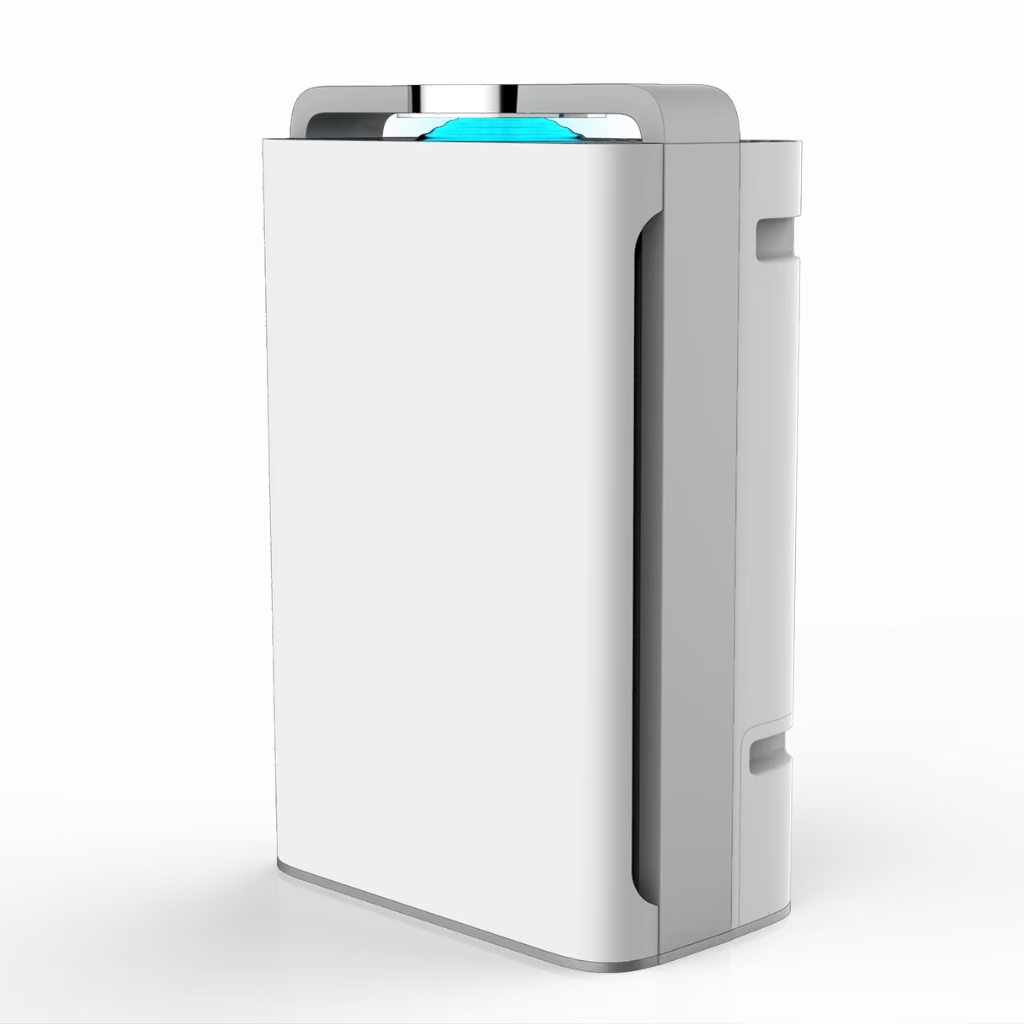
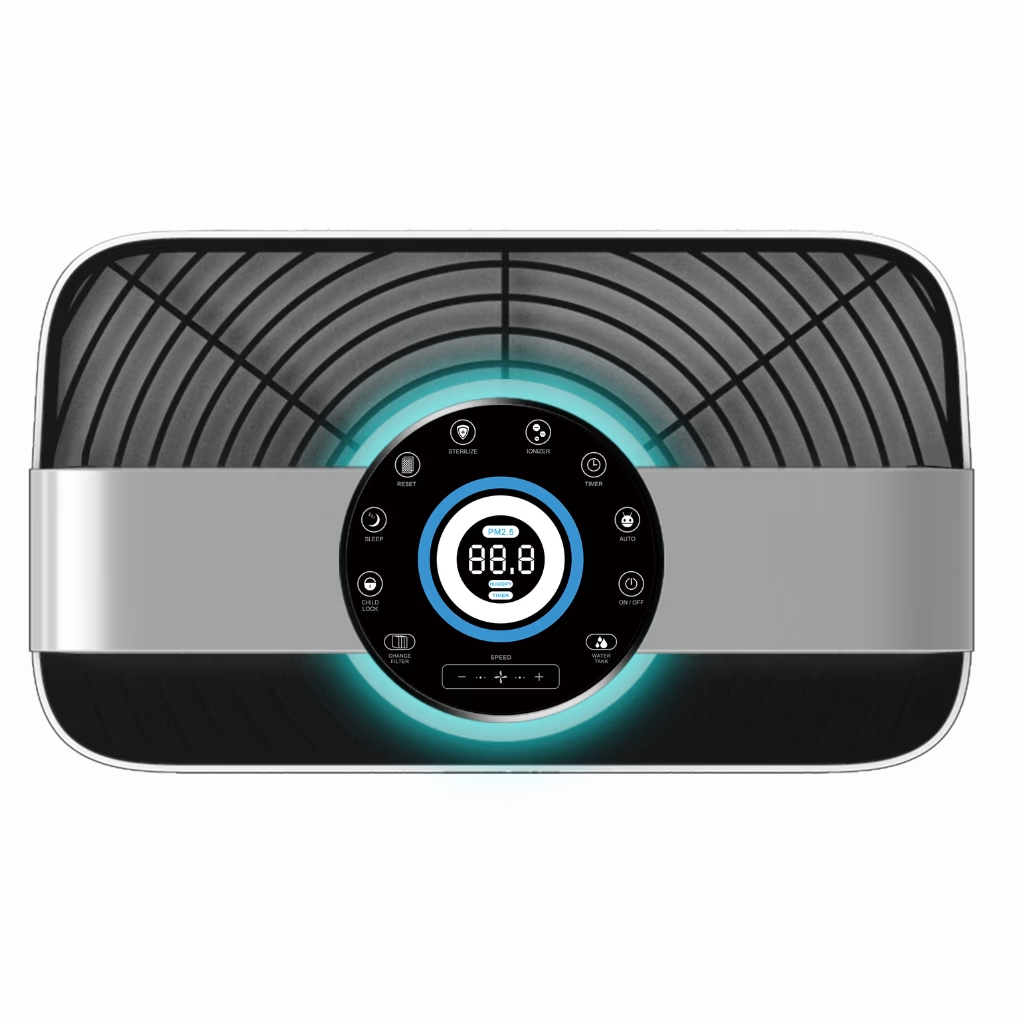
SAV K08A Air Purifier + Humidifier — available at Savage Excess
Most people assume their home air is clean. It isn't. The EPA estimates indoor air quality is consistently worse than outdoor air — a problem amplified by modern insulation, synthetic furniture off-gassing, pet dander, cooking fumes, and seasonal pollen seeping through windows and doors.
The consequences are real: persistent allergies, disrupted sleep, worsening asthma, fatigue, and long-term respiratory strain. The good news is that a good air purifier for home use can filter out 99.97% of airborne particles — including the sub-micron ones your HVAC system simply ignores.
The WHO classifies air pollution as the world's largest single environmental health risk. PM2.5 particles — invisible to the naked eye — are the most dangerous, penetrating deep into lung tissue. A HEPA-13 air purifier captures over 99.97% of these particles per pass.
An air purifier draws room air through a series of filters, trapping contaminants before returning clean air to the space. Most quality units use a multi-stage system:
Look for models that combine air purification with humidity control. An air purifier humidifier combo handles two common indoor air problems in a single device — saving space, energy, and money over buying separate units.
The air purifier market is flooded with products making bold claims. Here is every spec that actually matters — and what the numbers mean for your home.
This is the most abused term in the category. True HEPA (or HEPA-13) is a certified standard capturing ≥99.97% of particles at 0.3 microns. "HEPA-type" or "HEPA-like" filters have no certification standard and may capture as little as 85% of particles. Always verify: True HEPA-13 or higher.
CADR measures how much filtered air the unit delivers per hour, in m³/h. A higher CADR means faster air cleaning. Match the CADR to your room size — undersizing is the most common purchasing mistake.
Air purifiers run continuously. Look for units below 45 dB on medium settings — equivalent to a quiet library. Bedroom units should ideally run at 30–35 dB on sleep mode.
The sticker price is only part of the cost. Factor in annual filter costs — typically $30–$80 per year for quality HEPA filters. Smart models with filter life indicators help you avoid changing filters too early or too late.
Modern air purifiers include air quality sensors, auto-adjustment modes, app control, and real-time PM2.5/VOC readings. These aren't luxuries — they let the unit respond to actual air quality rather than running at a fixed speed wasting energy.
HEPA stands for High-Efficiency Particulate Air. The standard was originally developed for nuclear facilities — which should give you some confidence in its effectiveness. Here's how filter grades compare:
| Filter Grade | Filtration Efficiency | Best For | Verdict |
|---|---|---|---|
| HEPA-10 | 85% at 0.3 μm | Basic dust, large particles | Avoid |
| HEPA-11 | 95% at 0.3 μm | General household use | Acceptable |
| True HEPA / HEPA-13 | 99.97% at 0.3 μm | Allergies, asthma, PM2.5 | Recommended |
| HEPA-14 (Medical) | 99.995% at 0.3 μm | Hospitals, immunocompromised | Premium |
For most homes, HEPA-13 is the gold standard. It captures fine dust, all common allergens, mold spores, smoke particles, and the PM2.5 pollution associated with long-term respiratory harm.
Room coverage is where most buyers make mistakes. A unit rated for 200 sq ft will be nearly useless in a 400 sq ft living room. Use this guide to match CADR to your space:
| Room Size | Recommended CADR | Typical Room | Recommended Setting |
|---|---|---|---|
| Up to 150 sq ft | 100–150 m³/h | Small bedroom, office | Low/Sleep Mode |
| 150–300 sq ft | 150–220 m³/h | Master bedroom, study | Medium |
| 300–430 sq ft | 220–320 m³/h | Living room, open plan | Auto / Medium-High |
| 430–650 sq ft | 320–450 m³/h | Large living/dining combo | High |
| 650+ sq ft | 450+ m³/h or 2 units | Open floor plans, basements | Consider 2 units |
Divide your room's square footage by 1.5 to get the minimum CADR you need in m³/h. For a 300 sq ft room: 300 ÷ 1.5 = 200 m³/h minimum. Always go slightly higher for faster purification and quieter operation at lower fan speeds.
After reviewing the available options across our Consumer Electronics range, the SAV K08A is our clear recommendation for most homes in 2026. It's the rare unit that handles both air purification and humidity management without compromise.
Available at Savage Excess · Ships from New York
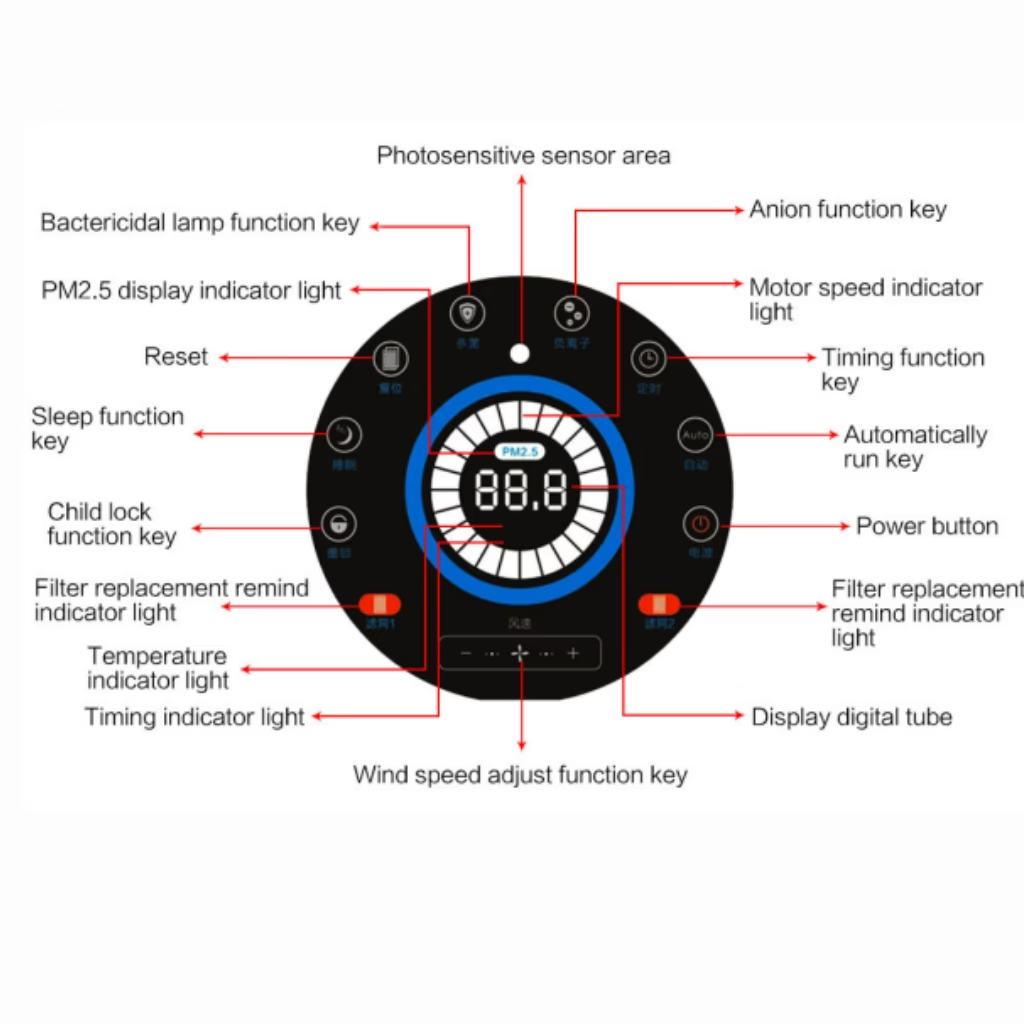
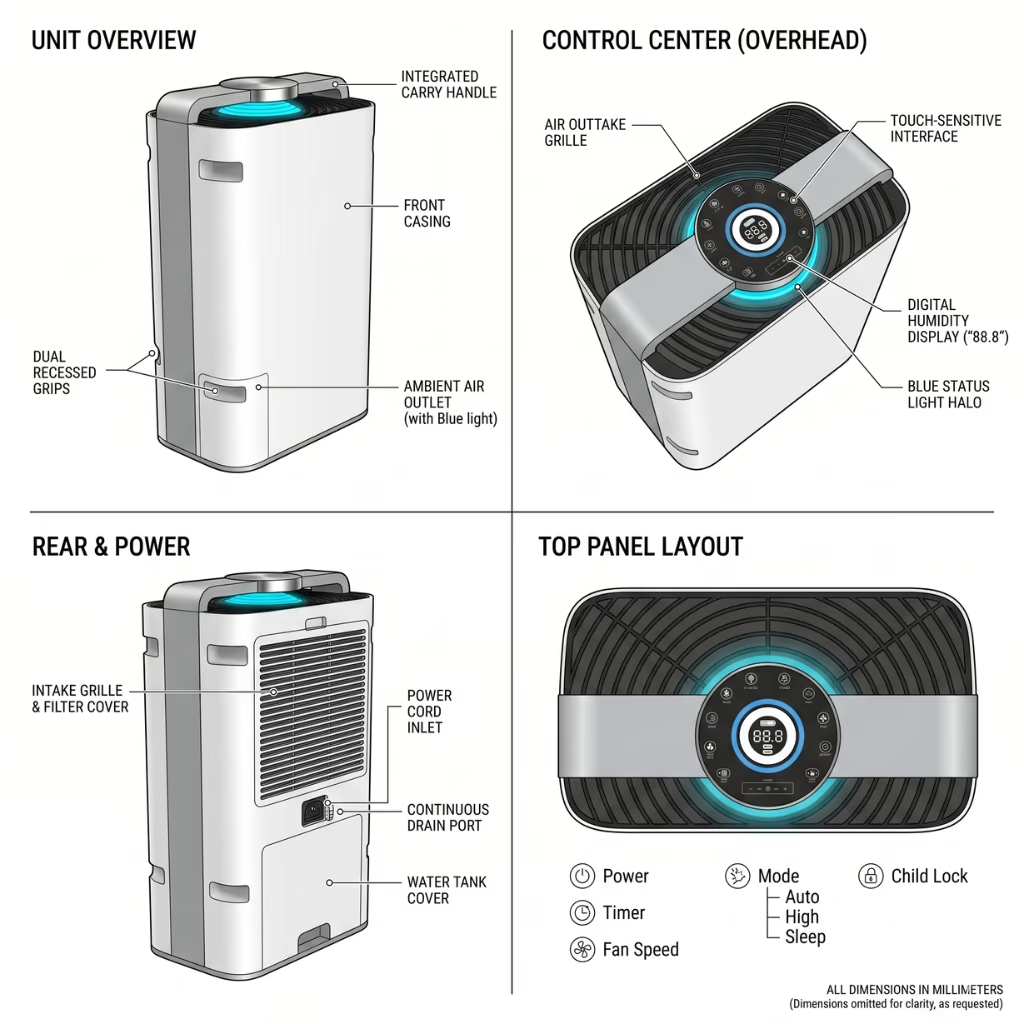
When shopping for the best air purifier for home use, use this comparison to understand how key features stack up across different spec levels:
| Feature | Budget Units (<$100) | Mid-Range ($100–$300) | SAV K08A (Premium) |
|---|---|---|---|
| Filter Grade | HEPA-type / HEPA-10 | HEPA-11 or True HEPA | True HEPA-13 |
| CADR Rating | 80–150 m³/h | 150–250 m³/h | 300 m³/h |
| Room Coverage | Up to 200 sq ft | Up to 320 sq ft | Up to 430 sq ft |
| Humidifier | None | Rare | Built-in |
| PM2.5 Removal | ~70–85% | ~90–95% | >98% |
| Smart / Auto Mode | No | Some | Yes |
| Air Quality Display | No | Some | Real-time |
Placement and setup have a bigger impact on air purifier performance than most people realise. Follow these steps to get the most out of your unit:
Optimal placement: open space with 12–18 inches clearance on all sides
Start with the room where you spend the most time — typically the bedroom or living room. Running an air purifier during sleep hours has the highest health impact since the body recovers and regenerates overnight.
Place the unit away from walls, furniture, and corners. Air purifiers need at least 12–18 inches of clearance on all sides to draw and circulate air efficiently. Never place in a tight alcove or closet.
Air purifiers work best in enclosed spaces. Leaving windows open constantly defeats the purpose — outdoor pollutants continuously enter and overload the filter. Brief ventilation is fine; continuous open-window use is counterproductive.
If your unit has an air quality sensor and auto mode, use it. The unit will increase fan speed when pollution spikes (cooking, cleaning, outdoor events) and drop back to low when air quality improves — saving energy and extending filter life.
Sleep mode dims the display, lowers fan speed to the quietest setting, and typically runs at around 30 dB — quieter than a whispered conversation. Your air purifier should be on all night, not switched off at bedtime.
The biggest mistake is running an air purifier only when air quality feels bad. For meaningful health benefit, it should run 24 hours a day. Modern auto modes keep energy consumption minimal — typically 15–40W on low settings.
Even the best HEPA air purifier degrades quickly with neglected maintenance. Here's what to do and when:
| Task | Frequency | Why It Matters |
|---|---|---|
| Clean pre-filter | Every 2–4 weeks | Prevents large debris clogging the HEPA layer, extending filter life significantly |
| Wipe exterior & intake vents | Monthly | Dust buildup on intake vents reduces airflow and forces the motor to work harder |
| Replace HEPA filter | Every 6–12 months | A saturated HEPA filter releases trapped particles back into the air — replace on schedule, not by smell |
| Replace carbon filter | Every 3–6 months | Activated carbon loses adsorption capacity — old carbon filters become odor-neutral but not odor-removing |
| Check humidity level (combo units) | Weekly | Keep humidity between 40–60% RH. Below 40% causes dry air issues; above 60% encourages mold growth |
Never wash a HEPA-13 filter with water. HEPA filters use a precise fibre arrangement that water destroys. Only pre-filters are washable. When in doubt, check your unit's manual — or contact Savage Excess support.
SAV K08A True HEPA-13 filter — replace every 6–12 months for optimal performance
If you're interested in improving your home environment further, explore our Aroma Diffusers — a natural complement to air purification that adds therapeutic fragrance alongside clean air. You can also read our upcoming guide on the differences between aroma diffusers vs humidifiers to understand how these devices work together.


 Savage Support
Someone in New York, NY
purchased a Savaroma Diffuser
Just now